
A Letter from the Office of the Borough Clerk, Stone Harbor, N. J., July 11, 1931
In 1931 the old Stone Harbor Rail Bridge entering town at 96th Street, a combination railroad and highway bridge, was condemned by the county and was slated to be replaced by a stronger span and draw section. This action was on account of expensive repairs, ongoing maintenance issues along with a significant increase in vehicular traffic including automobiles, motor buses and trucks. The original 20-year-old bridge, opened and officially dedicated by New Jersey Governor Woodrow Wilson on July 3, 1911, would be replaced with a new bridge built for auto traffic only, leaving the railroad on the west bank of the Great Channel. For just a very short period of time, rail operations continued but only to the west end of the new replacement bridge, and passengers were thus inconvenienced and obliged to go the rest of the way into town by either taxicab or on foot.
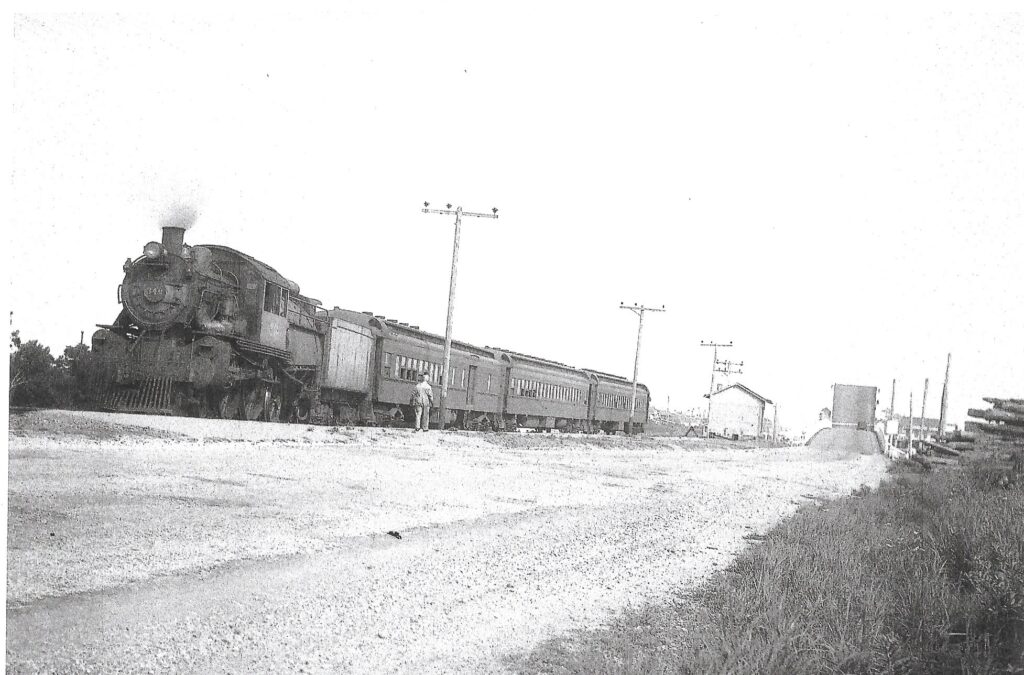
Careful examination of this first image reveals a Reading Railroad Company locomotive type 4-4-2, and its 3-car train have stopped at the end of the Stone Harbor Branch. The train can go no further east as the track ends at the very point where it sits. The photographer who took this photo was on the south shoulder of Stone Harbor Boulevard and is, as I am sure you can tell, looking in an easterly direction toward Stone Harbor. This scene is just across the Intracoastal Waterway, and the open or raised drawbridge in the background is the 96th Street Bridge that leads into the borough.
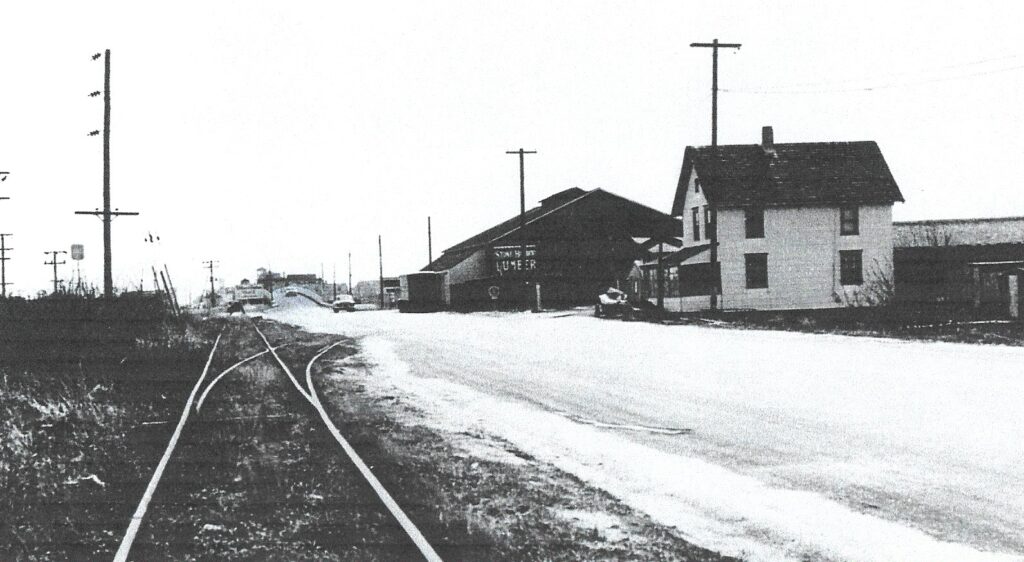
The second photographic image presented here was most likely taken in the latter 1940s and also depicts the 1931 replacement bridge in the distance entering town. If you look carefully on the far left, you should be able to see the relatively new second water tower atop its four-legged support structure that was erected around 1941. You can also see the spur or set of tracks that branch off from the main line to the right (across the roadway) as the railroad continued to serve the lumberyard (see the large wooden structure with a large lumberyard sign shown in the center of the image) for still another few years. Finally, the two automobiles (one on the bridge and the other on the road heading into town) in this image appear to this writer to be of the latter 1940s time period. It is amazing just how much we can learn from photos when we take the time and look very closely. Searching for and recognizing even subtle clues can be very beneficial when trying to understand and even determine the date of unmarked photos. Just how those photographic details are all connected can speak to us and provide us with a better understanding of the so-called bigger picture so we can therefore derive greater meaning of what is depicted.
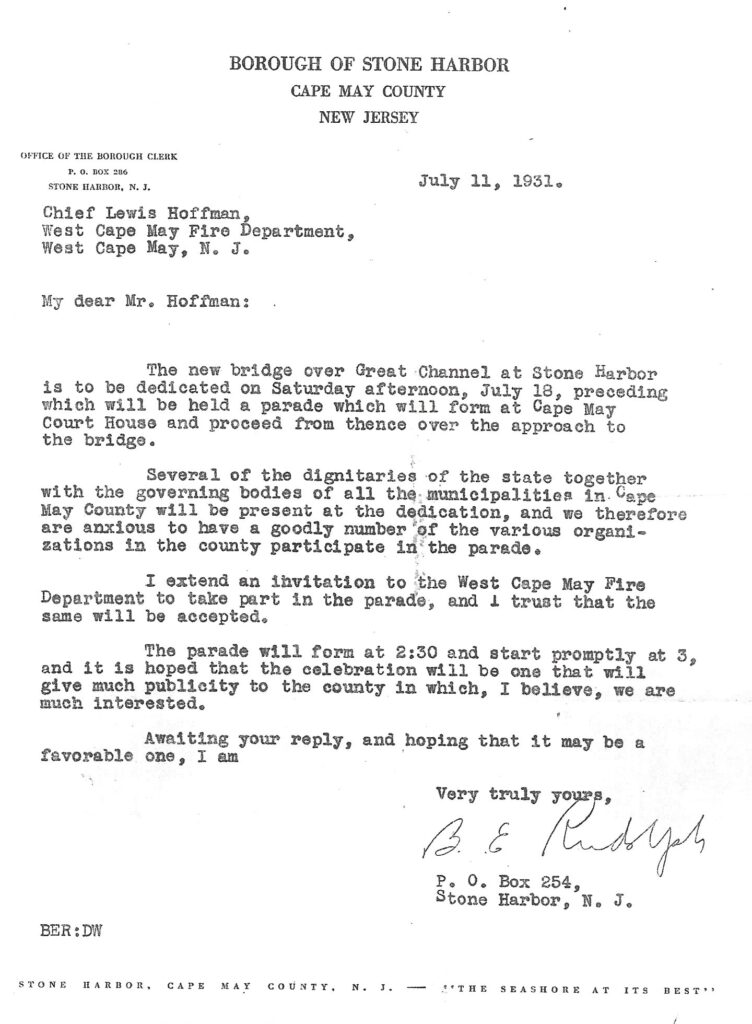
This third and final image is a typewritten page that provides the very basis for this brief account. You should be able to read it here in its entirety. Typed on July 11, 1931 and on official “Office of the Borough Clerk” letterhead stationery, this was an invitation letter from B. E. Rudolph to Chief Lewis Hoffman of the West Cape May Fire Department. The substance of this invitation is that a new bridge over the Great Channel is about to be dedicated one week hence on Saturday afternoon, July 18. Expressed in the letter is Borough Clerk Rudolph inquiring if the Chief of the West Cape May Fire Department would like to take part in a celebratory parade on the occasion of the dedication of the new bridge. This promises to be an important occasion with considerable fanfare and publicity along with many state and local officials and various organizations participating in the festivities. One can only conjecture that a favorable reply by Fire Chief Hoffman was returned in a timely manner to the Stone Harbor parade event planners. Clearly this was a newsworthy event.
By the way, Bert E. Rudolph would later go on to serve as Mayor of Stone Harbor from February 20, 1939 to May 11, 1940 for an interim period. In addition, Bert would also become a Borough Councilman for 7 years from 1933 through 1939.
For your information, a copy of this particular letter is located at the Stone Harbor Museum archives section, and it is with great appreciation that this writer thanks the museum curator and staff for having been provided access to the museum’s reservoir of historical materials and information.
Please know that all are cordially invited to visit the Stone Harbor Museum. Conveniently located at 9410 Second Avenue, admission is free! As we are approaching the 2026 Summer Season, why not make note of the summer hours: 9 AM to 12 PM Monday thru Saturday. Access their great website by going to www.stoneharbormuseum.org or contact them by phone at: (609) 368-7500.
You are in for a real treat at the Stone Harbor Museum with more than 400 years of history awaiting you. Drop by and explore vintage maps, photographs, oral histories, numerous fascinating visual displays and exhibits, many blue binders full of topically arranged information, images and newspaper clippings, old bathing suits, the popular prize-winning video “Stone Harbor Stories” and much, much more. And there are knowledgeable, trained and welcoming volunteers who serve as docents conducting tours through the museum and who can answer questions from the public. So what are YOU waiting for?